
Children are seen as capable, independent learners with an innate curiosity, fostering confidence and self-esteem.
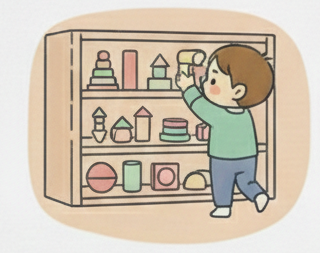
Children choose their own activities and work at their own pace within a structured environment, developing responsibility and self-discipline.
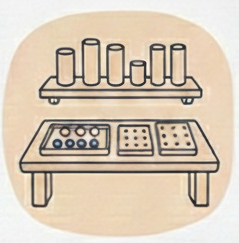
Classrooms are carefully designed so that everything is accessible, with materials that encourage hands-on learning and exploration.
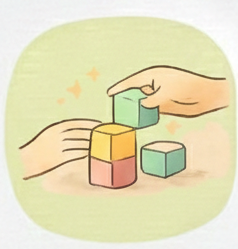
Learning happens through real-world activities, object manipulation, and sensory experiences rather than traditional formal instruction.
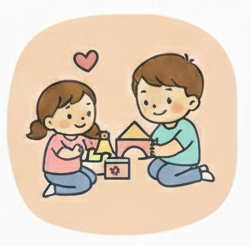
Children of different ages learn together, inspiring younger children and reinforcing older children’s knowledge as they help peers.

Learning is its own reward, with accomplishment coming from mastering a skill rather than external rewards.
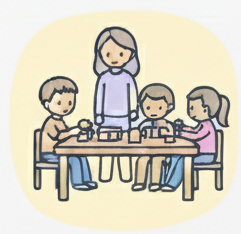
Teachers act as guides, observing, supporting, and preparing the environment without interrupting a child’s concentration.

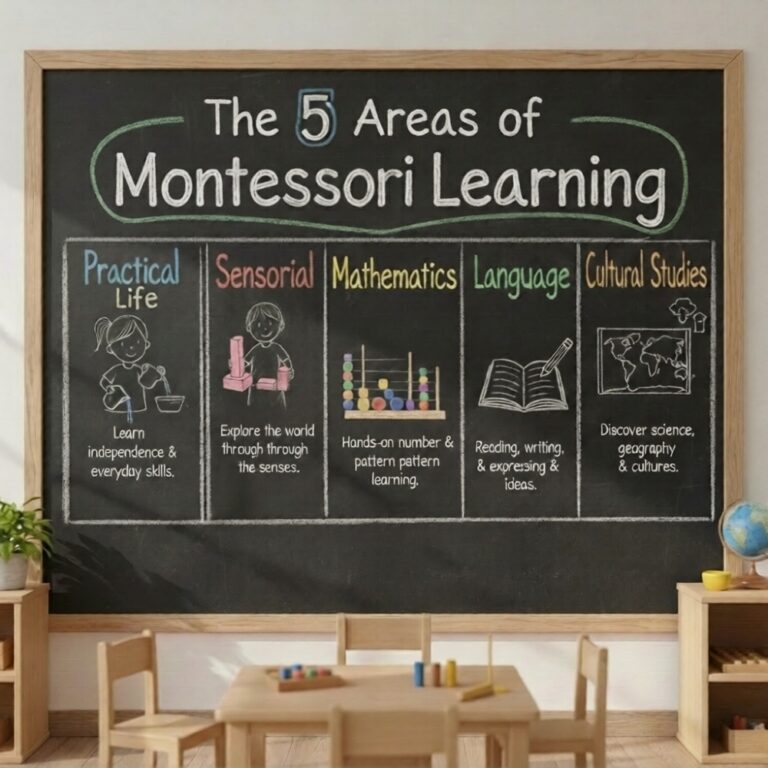
Practical Life activities help children build independence, coordination, focus, and care for themselves and their environment. Through hands-on tasks, children strengthen the fine-motor and concentration skills needed for early writing and reading.

Sensorial materials help children explore and classify the world through their senses. By working with size, shape, color, and dimension, children build strong observation skills that prepare them for future math learning.

Montessori math materials make abstract ideas concrete. Children learn numeration, place value, and the four operations through tactile, sequenced activities that build deep understanding and confidence.

Montessori language activities support early writing and reading through vocabulary work, phonetic awareness, storytelling, and materials that develop fine-motor control.
The Cultural curriculum introduces children to geography, science, history, and world cultures through hands-on activities, maps, artifacts, and exploration of animals, habitats, and continents.